
The Hidden Cost of Grant Funding
Estimated read time: 5 minutes
When Communities Must Conform to Access Support
Over the years, I’ve had the privilege of working alongside Indigenous communities, non-profit organizations, and funding partners across Canada. Spending years inside grant systems has forced me to wrestle with an uncomfortable question: What happens when access to funding depends entirely on how well communities conform to institutional expectations?
This is not a criticism of every funding program; many funders are deeply committed to equity, reconciliation, and community-led impact. But intentions and systems are not always the same thing.
In practice, many Indigenous communities and grassroots organizations still encounter funding structures rewarding institutional fluency over community realities. Access to resources too often depends on how effectively organizations can translate their priorities into key words, timelines, metrics, and administrative processes funding institutions recognize as legitimate.
This creates something larger than administrative burden – it creates pressure to reshape oneself for authority. Indigenous communities are repeatedly required to contort their values, language, and leadership approaches to access resources intended to support them. If program funding won’t recognize Indigenous ways of demonstrating impact, we must ask difficult questions about the systems we’ve built.
Structural Compatibility, Not "Capacity Gaps"
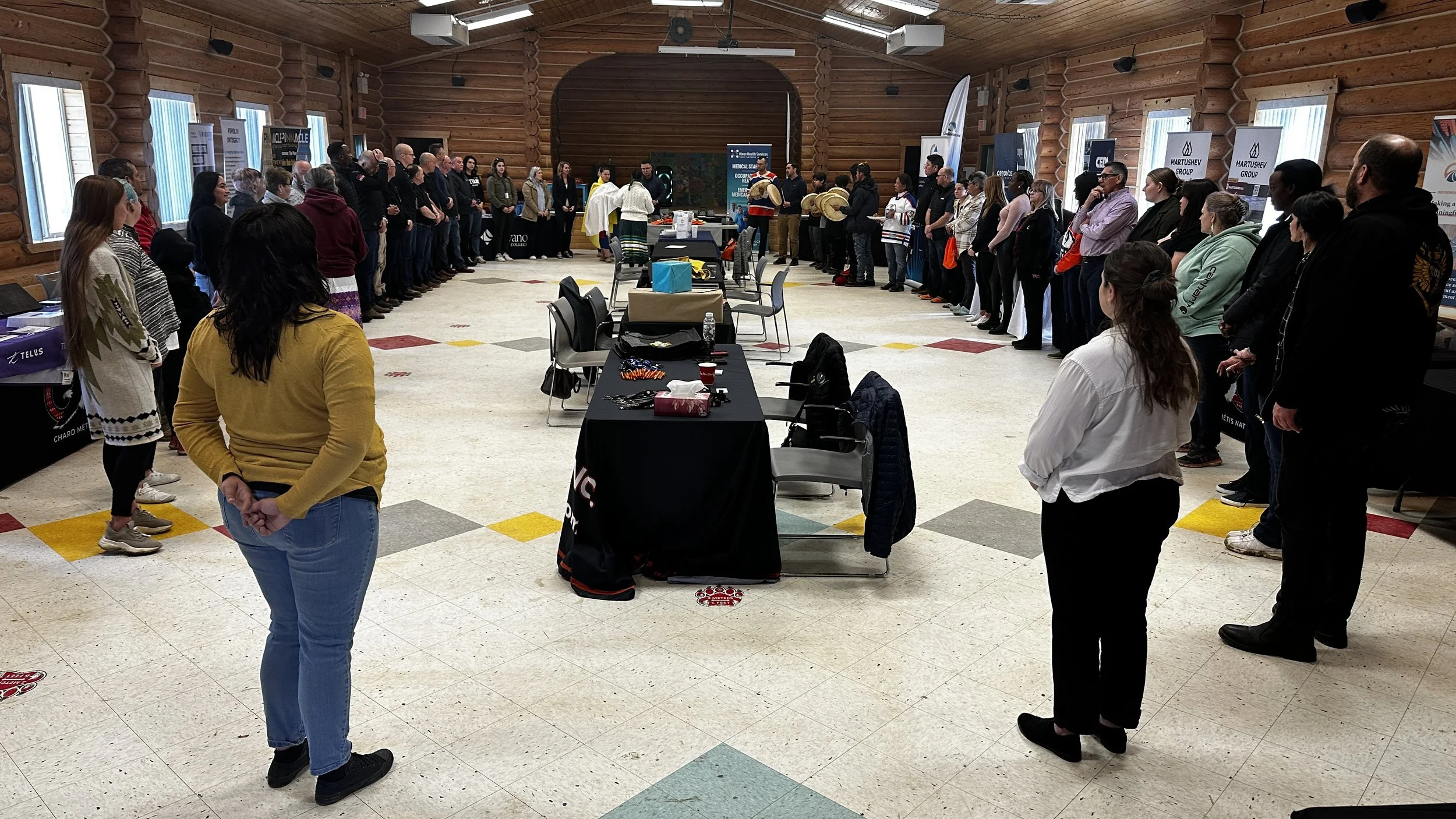
Community gathering
One of the most persistent narratives in philanthropy is the idea of “capacity gaps.” Communities are frequently described as lacking the necessary capacities to navigate the process:
grant writing;
administrative;
reporting; and
readiness for funding, etc.
Sometimes those pressures are real. Many communities are balancing housing needs, infrastructure priorities, healthcare challenges, education gaps, staffing shortages, emergencies, governance responsibilities, and community care simultaneously. But the root issue is rarely organizational capacity. It is structural compatibility.
Most grant systems were designed around Western bureaucratic models that demand:
linear planning or rigid timelines;
highly technical language;
inappropriate frameworks; and
standardized definitions of success.
The challenge is not that communities lack vision. The challenge is that funding systems routinely ignore leadership unless it is presented in the language of the institution.
The Burden of Proving Worthiness
The amount of unpaid labour communities expend simply trying to prove they are worthy of support is staggering. A single grant application can dominate a community's focus. We should ask: Who are the strategic plans, logic models, risk frameworks, or evaluation methodologies really for? While these tools have value, they require an administrative infrastructure that small Indigenous communities, grassroots organizations, and non-profits simply do not have.
This exhausting labour happens before a single dollar is secured. I’ve seen leadership teams writing applications late at night after full days supporting community members, and CEOs balancing crisis response while navigating complicated funding portals with impossible timelines.
In these situations, administrative complexity does not measure impact. It measures institutional endurance. The organizations best positioned to access funding are often not the ones closest to community realities, but the ones with the deepest administrative capacity to navigate the bureaucracy.
Institutional Language as a Gatekeeper
One of the most complicated parts of grant writing is translation – not between languages, but between ways of understanding the world. Many Indigenous communities already know exactly:
what healing requires;
what youth need;
what Elders are asking for; and
what long-term community wellbeing looks like.
The difficulty lies in translating those priorities into formats institutions recognize as credible.
I’ve seen deeply relational, culturally grounded work reduced to narrow output metrics because organizations knew those metrics were easier to fund. I've seen proposals rewritten repeatedly to sound “professional enough,” even when the original language carried more clarity, value, meaning, and truth.
When storytelling must become metrics, when relational work must become deliverables, and when culturally grounded leadership must fit rigid templates, communities begin adapting to systems rather than systems adapting to communities. This conditional access to support unintentionally reproduces colonial dynamics.
The Trap of Survival-Based Funding
Short-term funding cycles force communities into an ongoing survival mode. Organizations spend invaluable time:
reapplying;
re-explaining;
re-justifying; and
re-proving their value.
Even highly successful programs face uncertainty every one to three years. This instability strains staffing continuity, long-term planning, community trust, and leadership wellbeing. Communities cannot focus on long-term transformation when they are constantly preparing for the next funding cliff.
I’ve worked with organizations doing remarkable work in mental health, cultural revitalization, language preservation, and youth programming – all while wondering if they would still have funding six months later. Yet, most accountability still flows upward toward institutions rather than outward toward communities.
What More Equitable Funding Looks Like
Meaningful change requires more than adding equity language to existing structures. It requires rethinking the assumptions underneath funding systems themselves. Many funders genuinely want to improve, and we are starting to see encouraging shifts:
Indigenous-led funding initiatives;
multi-year funding approaches;
relational grant making; and
simplified reporting structures.
A truly equitable system would focus on simplifying applications, recognizing oral and relational forms of knowledge, supporting community-defined outcomes, and building processes around relationships instead of compliance alone. Ultimately, we must ask: Are funding systems designed to control risk for institutions, or to create possibility for communities? Those are not always the same thing.
——-
Communities should not have to contort themselves to fit funding systems. Funding systems can evolve to recognize the strengths communities already carry.
Sovereignty requires space to lead without compromise. Axioma supports Indigenous communities and non-profit organizations with strategic grant writing, funding research, reporting support, and long-term capacity-building designed to reduce administrative pressure and protect leadership time.
Explore our funding support services or reach out to start a conversation.