
Decolonizing My Introduction: Between Chile, Canada, and Indigenous Lands
Estimated read time: 9 minutes
Tansi, edlánat’e. My name is Rolando. I am originally from Concepcion, Chile, South America, the unceded land of the Mapuche.
I came to Canada when I was just about a year old, in the 1970s, as a political refugee. I grew up in Nova Scotia, the homeland of the Mi’kmaq and now live in amiskwaciy-wâskahikan (aka Edmonton); I now live Treaty 6 territory, which is also part of the Otemipisiwak Métis Government’s Fort Edmonton Métis District (#9).
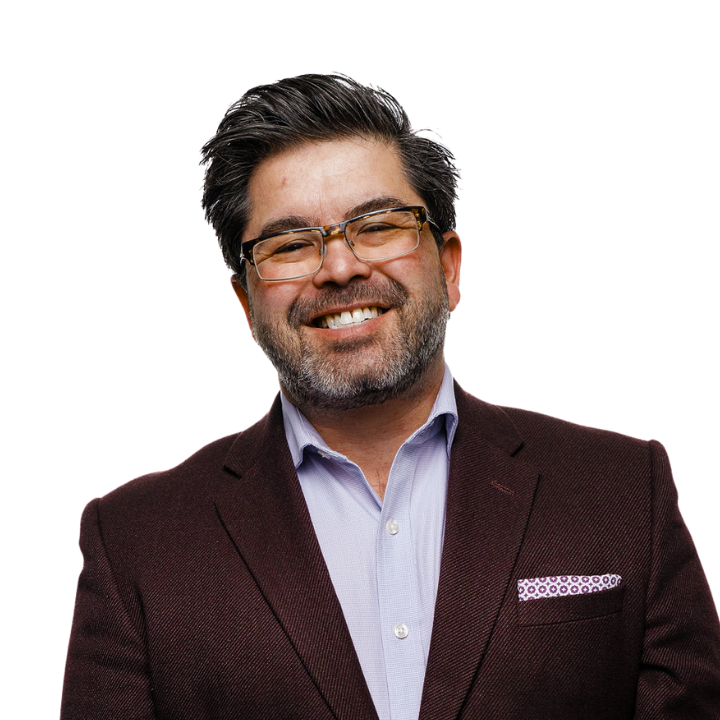
For years, I struggled with how to introduce myself. I would usually say something like: “I am a (role) at (X company).” That was true, but it always felt incomplete. I wasn’t naming the land I came from, or the land where I now live. I wasn’t acknowledging the Peoples whose histories run deeper than borders or nations. Something important was missing.
Growing Up Between Worlds
I was born in Concepción, Chile; on Mapuche land that remains unceded to this day. My family came to Canada as political refugees. As a kid, I grew up mostly around Caucasians, and like so many immigrants, I spent a lot of energy trying to fit in, walking between cultures. I didn’t have the words for it then, but I carried both pride in my roots and a kind of silence about them.
In preparing this post, I did some research and learned about something that shook me: the Treaty of Quilín, signed in 1641. After decades of brutal fighting, Spain did something almost unheard of for its time; it recognized the Mapuche as an independent nation. The Bíobío River was established as the border: north of it, Spanish-controlled Chile; south of it, Mapuche Wallmapu.
This landmark agreement was not assimilation, it was an acknowledgment of sovereignty.
I sat with that for a while. At a time when most Indigenous peoples across the Americas were being murdered and brutalized, the Mapuche had forced one of the world’s empires to treat them as equals. Of course, Spain signed the treaty out of necessity, not goodwill; they could not win the war. And even after Quilín, attempts to intrude and expand never fully stopped. But the fact remains: the Mapuche were never conquered, and their sovereignty was once recognized in writing. That history still echoes today when Mapuche leaders and communities insist that their land is unceded, their nation never extinguished.
Later in life, learning about that history reshaped how I see my birthplace. Concepción was not just a city on a map, it was a settlement on the very frontier of that treaty line, a place where Indigenous sovereignty was fiercely defended. Realizing I was born in the heart of that story was a wake-up call.
Finding Resonances in Canada
My journey eventually led me to amiskwaciy-wâskahikan (aka Edmonton), on Treaty 6 Territory and the Homeland of the Métis. Through my work alongside Indigenous communities, I began to hear and notice echoes that felt hauntingly familiar.
One moment that stands out came while I was working with the McMurray Métis in Fort McMurray. I remember seeing photos of traditional Métis people in poncho-like clothing, and being struck by how much they resembled the huasos, the Mapuche horsemen and Chilean cowboys. Later, I saw historic Métis family portraits and thought, “These could be my own family photos.” The faces, the clothes, the eyes - it felt like looking into a mirror across time and geography. To this day, I regret not taking pictures of the photos that Bill Loutit and Brian Fayant showed me - the conceptual original of their Métis Trackers program.
Then, while working as the Director of Communications and Citizen Engagement at the Métis Nation of Alberta (now the Otipemsiwak Government) I came across the concept/phrase “hiding in plain sight.” It hit me like a bag of bricks. Suddenly, I had words for my own childhood experience of walking between worlds; shaping myself to belong, never fully seen for who I was. And I realized this was not just my story. Métis families had lived this reality for generations, forced to conceal or downplay parts of their identity in order to survive. The Mapuche, too, carried this duality: adapting outwardly to dominant systems while preserving their culture beneath the surface.
This realization also cut close to home. In my own family, there is still a kind of shame or resistance to acknowledging any connection to the Mapuche. Whenever I raise it, the subject gets shut down. On one of my last trips back to Chile, I was introduced to the son of my cousin’s former nanny; Carmen. A woman who had been part of their household for decades and became part of the “extended family.” When my wife saw Carmen’s boy, she said he could have been my child. The resemblance was haunting. That moment was unsettling and illuminating all at once. It revealed how deeply these hidden connections run, and how much of our story is left unspoken.
Crafting a New Introduction
Out of these realizations came a question: How do I introduce myself in a way that honours both where I come from and where I now stand?
I experimented with different drafts. Some were too long, others too vague. The turning point came when I began with greetings in the languages of the people here Cree, and Dene. From there, I spoke of Concepción as Mapuche land, of my refugee journey, and of Edmonton as Treaty 6 Territory and Métis Homeland. And I ended with what feels most important: the responsibility I carry to walk in good relationship with these lands and peoples.
Decolonizing Myself
For me, this practice of naming land is one small step in the lifelong work of decolonizing myself. It is about acknowledging the histories that were hidden from me growing up. It is about seeing the resonances between my family’s story and the stories of Indigenous peoples in Canada. And it is about finding a way to stand honestly in both worlds without hiding.
Learning about the Treaty of Quilín reminded me that sovereignty, once recognized, does not simply disappear. The Mapuche forced Spain to acknowledge them as equals nearly four centuries ago. That recognition matters. Not just as history, but as a reminder that Indigenous peoples have always been nations, whether states choose to honour it or not.
When I say now that I was born in Concepción, on unceded Mapuche land, and that I live in amiskwacîwâskahikan on Treaty 6 Territory and the Homeland of the Métis, I am not just giving context. I am naming lineages of resistance and resilience that shape who I am. I know I will keep refining how I introduce myself. Maybe that’s the point. Each time I say the words, I get closer to the truth of who I am, where I come from, and where I stand.
if you'd like to chat about this or something else, I'd be happy to connect. Reach out, please.