
Estimated read time: 2 minutes
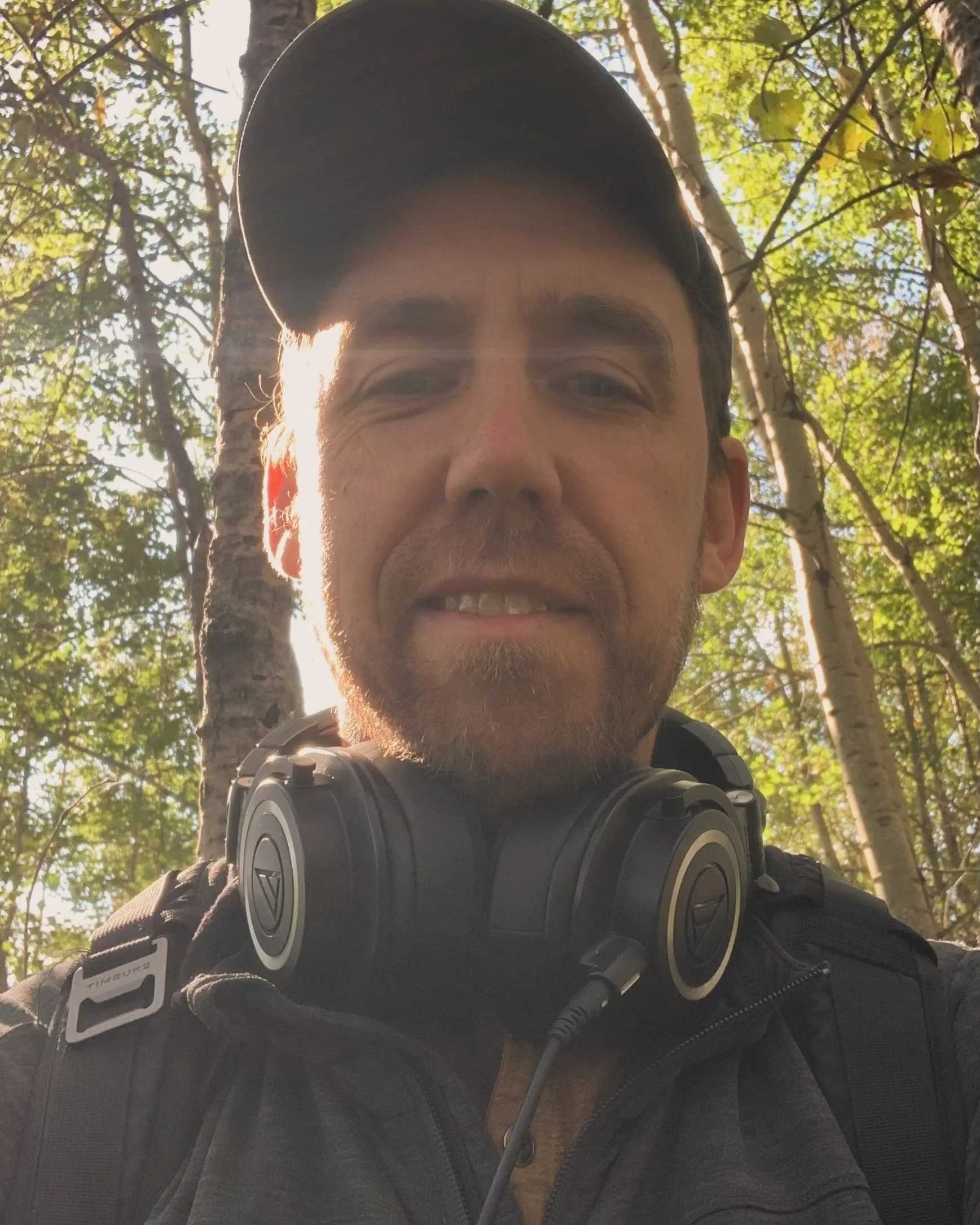
Before landing in the world of community grants, Julian Evans spent his time tuning into nature's subtlest signals. With an academic background centered on deep listening, his work ranged from capturing environmental soundscapes (mapping the acoustic signatures of an environment) to informally decoding the language of wild songbirds. Academia provided a space to study ecological embodiment and settler-Indigenous relations. But Julian felt called to ground these theories in hands-on community strategy. For Julian, grant writing isn't a transactional exercise on paper; it is an extension of that same attentive listening.
Drawing from composer Pauline Oliveros’s philosophy, Julian approaches listening as an active practice of expanding consciousness. Where mere hearing is a mechanical function of the ear, listening is an active sensory process that directs attention. When engaging with Indigenous communities, Julian applies “three-eared listening.” The first ear hears the explicit words spoken. The second ear tunes into the unspoken; subtle and implicit needs, or truths that can’t always be comfortably shared. The third ear listens inward and monitors his internal dialogue, scanning for assumptions and biases to ensure they don't overshadow the community's true narrative.
“When engaging with Indigenous communities, Julian applies “three-eared listening.””
Julian recognizes that true translation of a community story into a grant application requires humility. Spending a decade studying bird calls leaves one with the awareness that there is always nuance to learn. As such, working as a grant strategist means honoring the lived experiences of communities we don't belong to. Rather than imposing strict frameworks, Julian continuously asks thoughtful questions to gauge his level of understanding and ensure communities see their own voices reflected accurately on the page.
In his research on settler-Indigenous relations, Julian focused on the work of Nuu-chah-nulth hereditary chief and scholar Eugene Richard Atleo. Atleo’s teachings deeply reshaped Julian's understanding of colonialism and human connection. Today, Julian brings that same commitment to valuing different ways of knowing beyond cognitive prioritization, honouring somatic experience and emotional presence. Whether sifting through complex funding requirements or translating local priorities into proposals, he bridges the gaps between bureaucratic language and human reality…ensuring that every community’s story is heard on its own terms.
